Snacking 101
Sweet vs. Salty: How to Build a Snack Board Nobody Walks Away From
The best snack spreads are not about buying more. They are about balance, contrast and one very specific rule about texture. Here is the full playbook.
There is a moment at every gathering when someone hovers over the snack table, scans it twice, and quietly picks up nothing. That is not a people problem. That is a board problem. A snack spread fails for one of three reasons: everything tastes the same, everything feels the same in your mouth, or there is nothing to break up the sugar. Fix those three things and the board empties itself.
We build snack boards for a living, so we have made every mistake worth making. Here is the framework we use now, whether it is a movie night for two or a party tray for twenty.
The 60/40 rule
Start with proportions, not products. Sixty percent of the board should be salty and savoury. Forty percent should be sweet. Most people flip that ratio and wonder why the board stalls halfway through the night. Sugar is a sprint. Salt is the endurance run. Salty snacks keep hands moving back to the table long after the candy bowl has gone quiet.
Within that forty percent of sweet, split it again. Half should be chocolate, half should be chewy or fruity candy. Chocolate reads as rich and finishing. Gummies and sour candy read as refreshing and resetting. Serve only chocolate and people stop after two pieces. Serve both and they alternate all night.
Texture is the whole game
Flavour gets the credit, but texture does the work. Your board needs at least four distinct mouthfeels or it will taste monotonous no matter how much you spent on it.
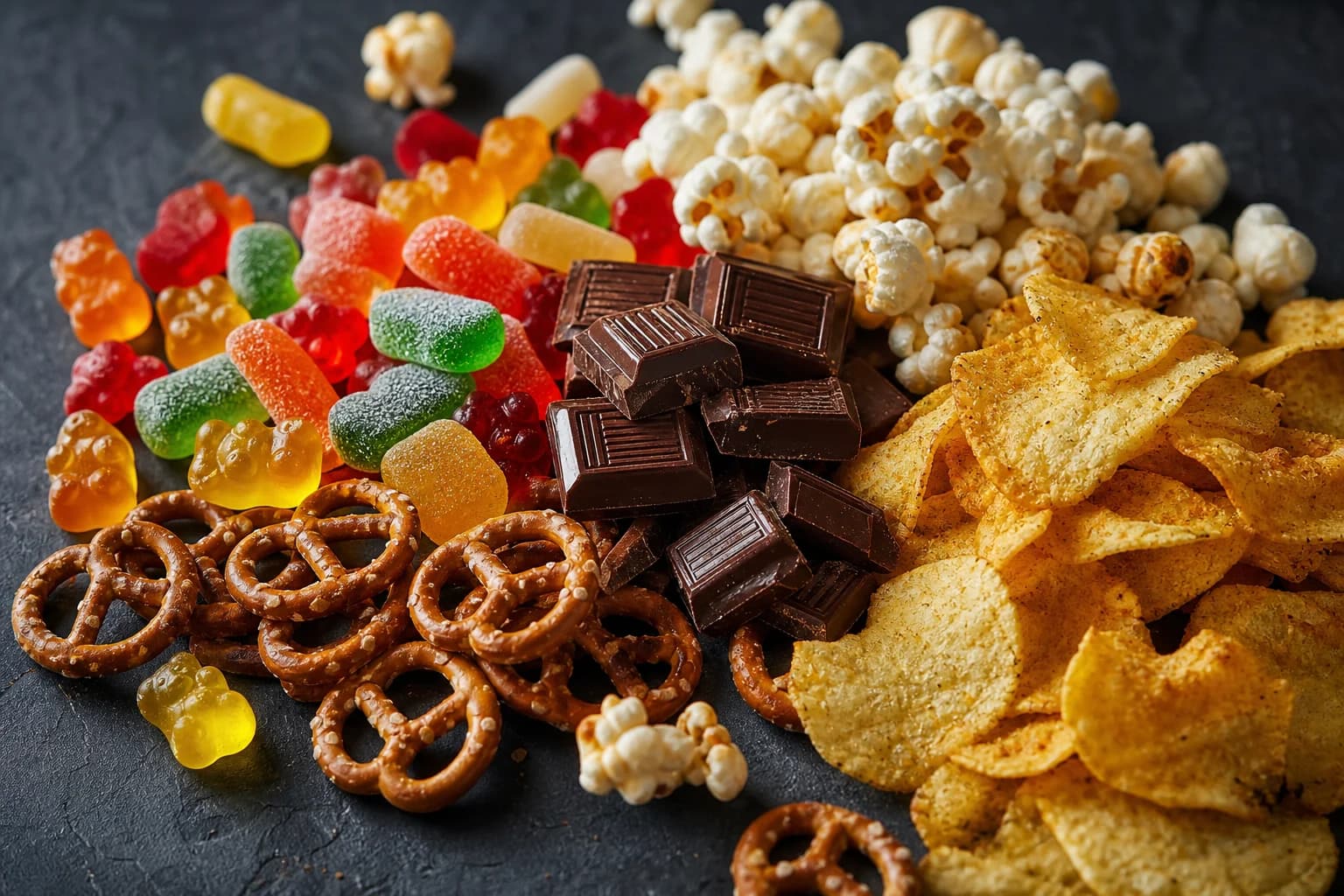
- Sharp crunch: kettle chips, pretzel pieces, corn nuts, crackers.
- Airy crunch: popcorn, puffed snacks, rice crisps. These bulk out a board cheaply and never feel heavy.
- Chew: gummies, taffy, licorice, caramels. This is the texture that slows people down and makes a snack feel like an event.
- Melt: chocolate squares, chocolate-covered nuts, filled bars. Always the smallest pile, always the first to disappear.
If you only remember one line from this article, make it this one: never put two snacks with the same texture next to each other. Chips beside crackers is a wasted inch of board. Chips beside gummy rings is a decision your guests get to make, and decisions are what keep a table interesting.
Build it in zones, not piles
A great board has a shape. Work from the outside in.
- 1Anchor the corners with your bulkiest items. Popcorn and chips go here because they take up volume and make the board look generous immediately.
- 2Run a river of chocolate through the middle. A diagonal line of chocolate squares or bars visually cuts the board in half and gives the eye somewhere to land.
- 3Fill the gaps with candy. Gummies, sours and small wrapped pieces are your grout. Push them into every empty space so the board reads as full rather than arranged.
- 4Add one savoury surprise. Chocolate-covered pretzels, honey-roasted nuts, or anything that is both salty and sweet at once. This is the item people ask about.
- 5Leave one clear edge. A board with no landing space is a board people are afraid to touch.
The small-bowl trick
Anything sticky, oily or intensely sour goes in its own small bowl. It keeps the rest of the board clean, and it signals to guests that this item is a bit special. Costs nothing, changes everything.
What to drink alongside it
Snack boards are thirsty work, and the drink you pair with them changes how the food tastes. Something cold and carbonated resets the palate between salty and sweet, which is exactly what you want when people are grazing for two hours. A chilled energy drink does the same job with a bit more lift, which is why it has become the default at our own late-night sessions.
Keep drinks off the board itself and on a separate tray or cooler. Wet cans on a snack board turn crackers soft within minutes, and soggy is the one texture we do not want.
Portioning for real life
For a casual evening, plan on roughly two handfuls of salty snacks and one handful of sweet per person, then add twenty percent because someone always brings a friend. For a longer session, hold a second wave in the kitchen and refresh the board once it looks picked over. A board that gets rebuilt halfway through the night feels twice as abundant as one giant spread that slowly deflates.
A snack board is not a shopping list. It is a rhythm: crunch, chew, melt, repeat.
Three boards you can copy tonight
The Movie Board
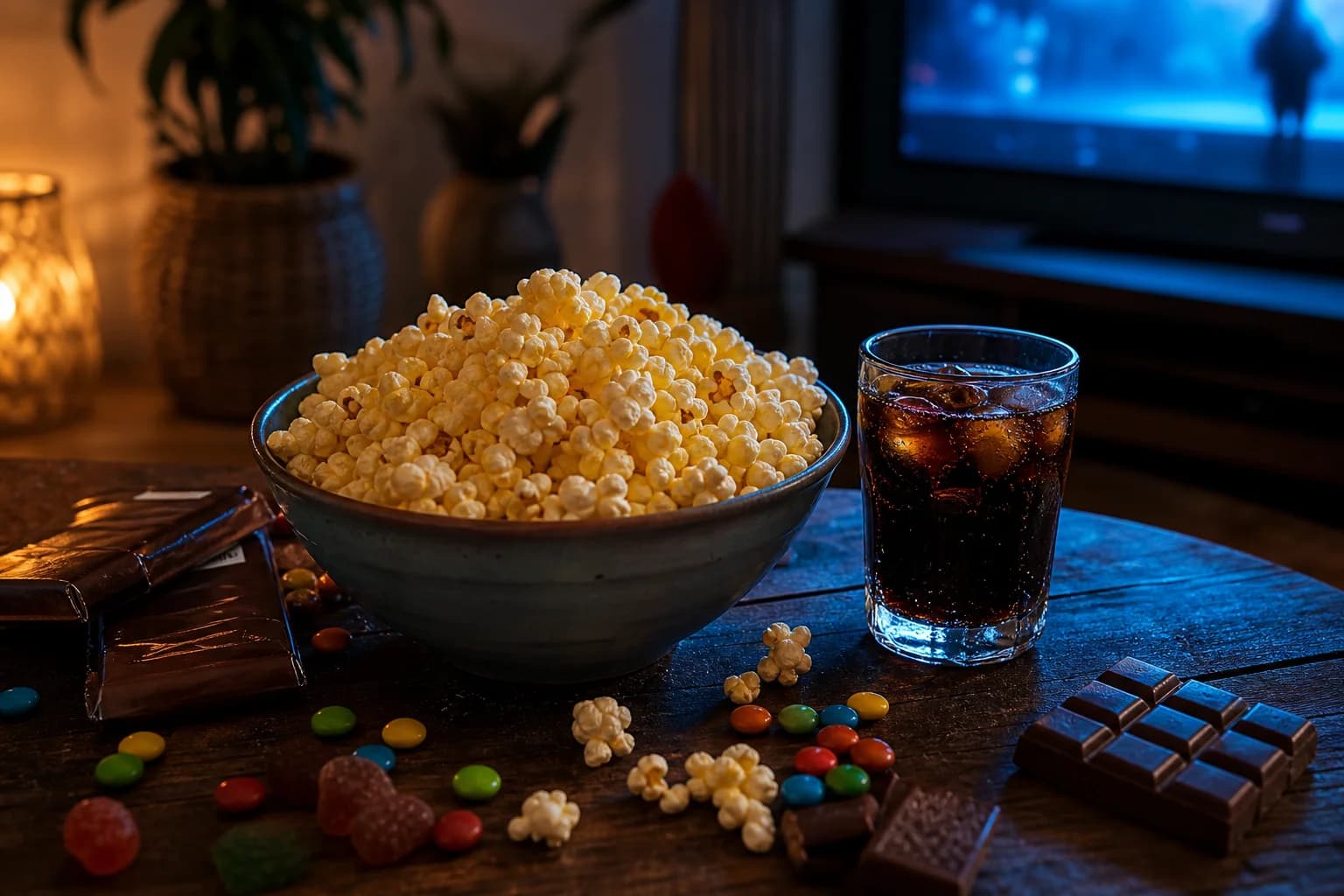
Popcorn corner, chips corner, a long line of chocolate down the middle, gummy worms and sour belts filling every gap. One bowl of chocolate-covered pretzels. Cold drinks on the side. Built in four minutes, gone in ninety.
The Game Night Board
Heavier on salt because the session runs long. Pretzels, crackers, corn nuts and puffed snacks around the edge, small wrapped chocolates scattered so nothing gets sticky on the cards, and one bowl of sour candy for the person who needs to stay sharp.
The Road Trip Box
Same rules, different container. Use a shallow box with dividers, skip anything that melts, and lean into chew and crunch. Pack the sweet section at the back so it lasts past the first hour.
The short version
Sixty percent salty, forty percent sweet. Four textures minimum. Never repeat a texture side by side. Anchor the corners, run chocolate through the middle, grout with candy. Add one salty-sweet surprise and keep the drinks off the board. Do that and the only thing left at the end of the night is an empty tray and a request to do it again next week.
Put it into practice
Candy, chocolate, snacks and ice-cold energy, all in one place. Free shipping over $99.
Shop the drop